








Jackman Law’s new assistant professor brings with her a background in philosophy and legal scholarship in technology and policy
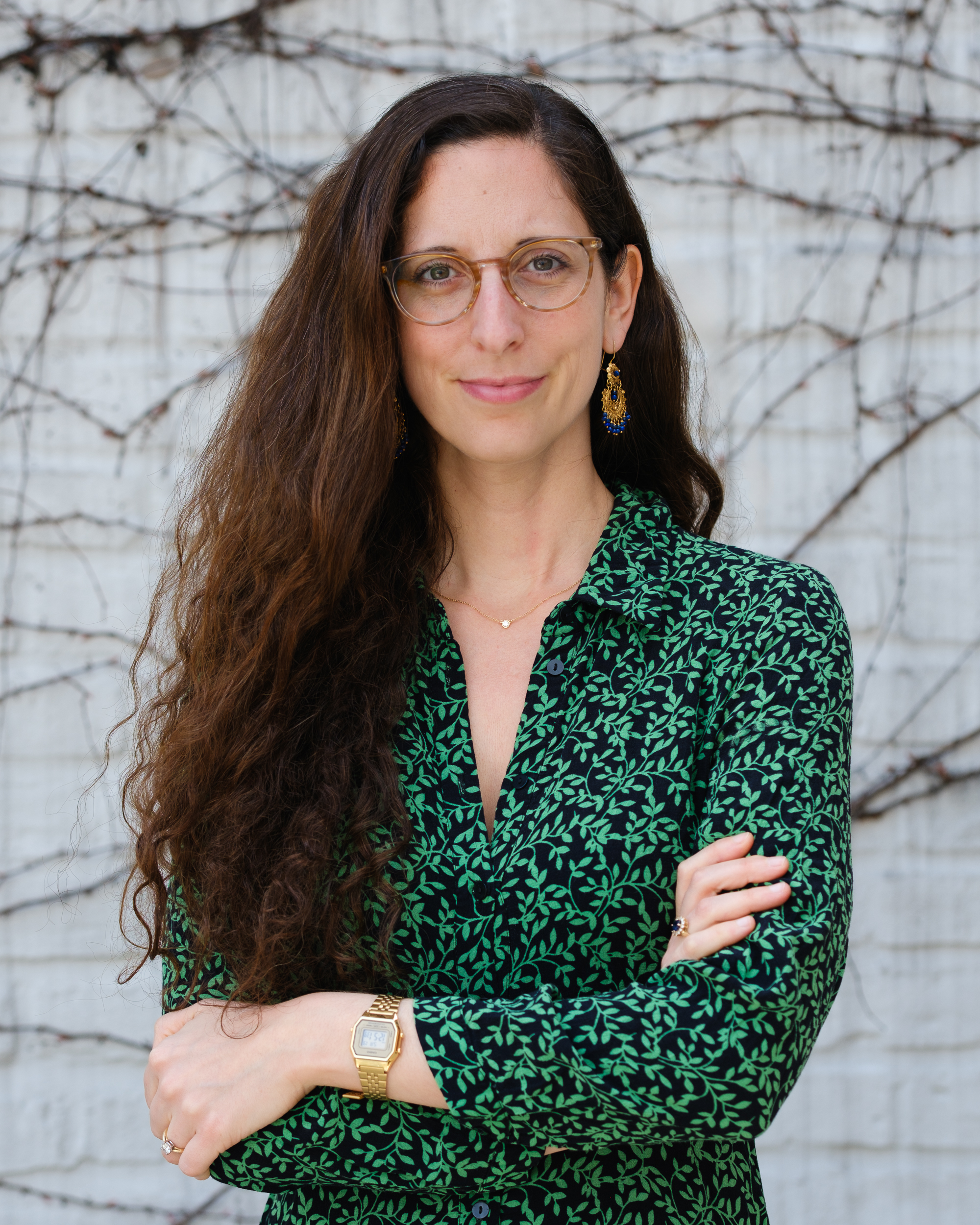
This fall, the U of T Faculty of Law welcomed a new assistant professor, Nathalie Smuha. Professor Smuha’s academic interests lie in the regulation of artificial intelligence (AI) and the intersection of law, technology, and philosophy. Between Belgium, the United Kingdom, and the United Sates, Professor Smuha is an internationally trained scholar who uses her background in philosophy and human rights to approach teaching and policy development in a unique manner.
Before joining the faculty at U of T, Professor Smuha wore many hats across the legal profession. Craving a more critical approach to her studies, Professor Smuha studied philosophy in concurrence with her study of the law at the KU Leuven Faculty of Law in Belgium. She then pursued an LLM at the University of Chicago Law School, where she was exposed to the Socratic method for the first time. Her education led her to an internship with the European Commission in antitrust and employment at an international firm working in antitrust law shortly thereafter.
Professor Smuha always knew she would return to academia at some point, and her experiences in private practice actually served as a springboard for her PhD topic. After working on a case pertaining to driverless vehicles, she became enamoured with learning more about the regulation of such technologies under a philosophical lens. Out of pure happenstance, while preparing her doctoral proposal, the European Commission’s department on AI regulation reached out to discuss creating precursory ethics guidelines for a prospective AI statute.
While policy development afforded her the opportunity to marry her passions in philosophy, technology, and law, Professor Smuha found that it required too much compromise between having to balance the interests of what seemed to be millions of individuals. As a result, she dove back into the world of academia in earnest and took up adjunct professorships at the NYU School of Law and Columbia Law School, and held visiting positions at the University of Oxford, the University of Chicago, and the University of Birmingham. Immediately prior to her arrival in Canada, she was an assistant professor and concurrent postdoctoral fellow at the University of Leuven.
Professor Smuha finds a particular interest in the field of AI law because of its polarizing nature; balancing innovation and regulation is part of the challenge that lies ahead for academics in this field. Further, the tech world is still largely male-dominated, and Prof. Smuha’s work emphasizes the importance of having an eclectic approach to policy development, having worked in the field as a woman with a legal-philosophical background.
While there is a dearth of AI regulation in Canada at the moment, there is no shortage of material for those interested in learning more about this burgeoning legal domain. Professor Smuha commends the work done by the Future of Law Lab for exploring AI regulation and is excited to be part of the new AI legal curricula here at U of T. Otherwise, for those interested in making a start in the field, Professor Smuha recommends taking a look at The Cambridge Handbook on the Law, Ethics and Policy of Artificial Intelligence, or other open-access legal aids.
Beyond being active in the legal landscape, Professor Smuha enjoys exploring Toronto for the first time. She has adventured around the many trails in and around Toronto, and has been indulging in the ephemerally pleasant late-summer weather in Canada. She particularly enjoys yoga and has an itch to rekindle her passion for theatre.
Getting the chance to disseminate knowledge in such a volatile field and the prospect of dialogic teaching is what excites Professor Smuha the most about being a part of the U of T Law community. Professor Smuha finds that technology law is a nascent field, and Canada’s vibrant AI scene is rife with unanswered questions. It is a field of law without borders, and Professor Smuha’s equally vibrant academic background has ensured that she is equipped to take on those questions.
Professor Smuha has expressed that she has felt extremely welcomed by U of T Law’s enthusiastic community and cannot wait to continue learning about, and from, students.