








A new era for U of T Law
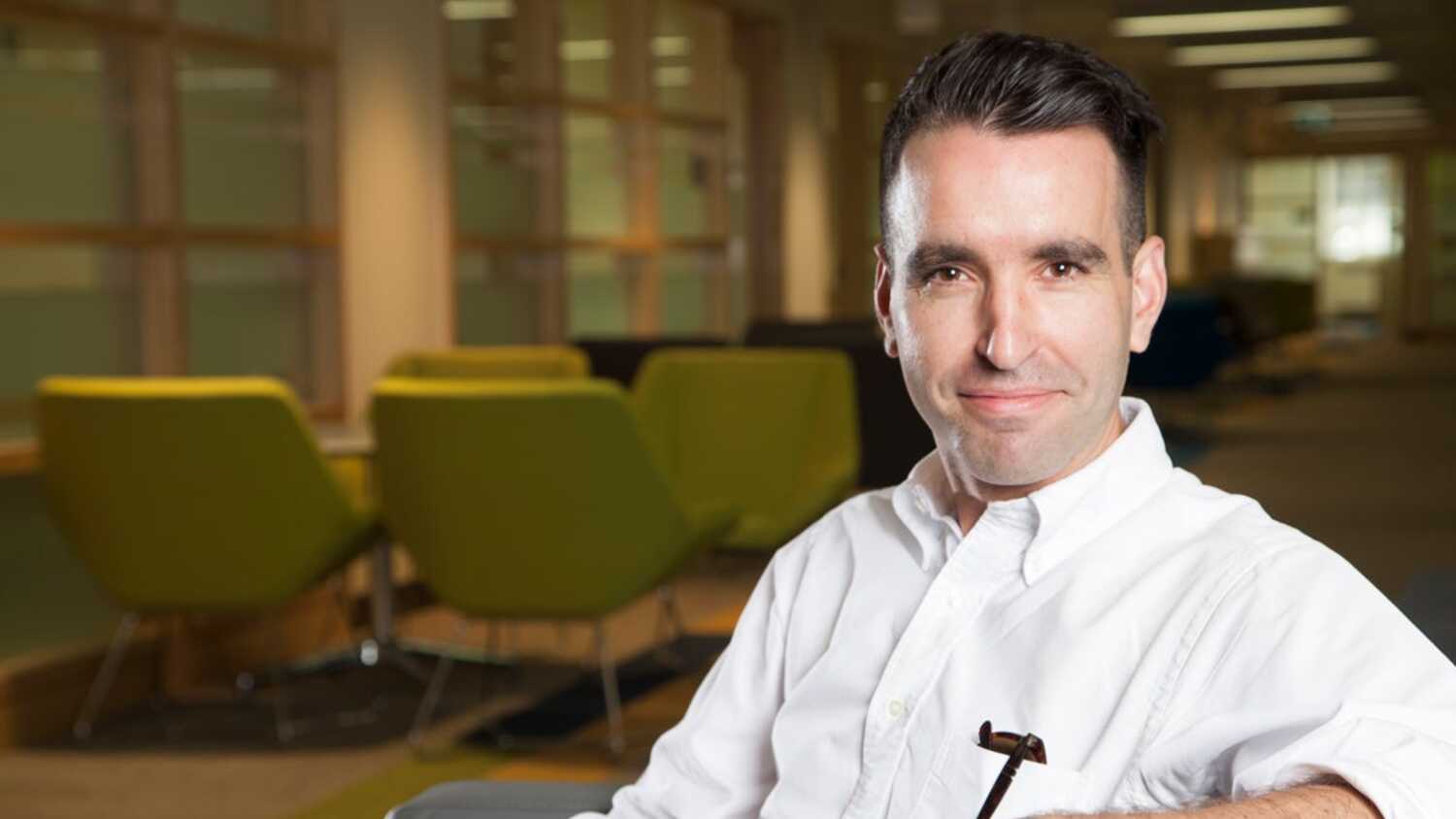
On Wednesday January 28, Dean Essert sat down with Ultra Vires to discuss his recent appointment as Dean. While the Coffee with DEssert cat is already out of the bag, we gained some insight into Dean Essert’s vision for the law school.
Note: This interview has been edited for brevity and clarity.
Ultra Vires joked in October when discussing the prospects for the new Dean that you were a fan favourite for some, but you hadn’t “sufficiently manifested an intention to acquire the role” of Dean at the time. Had you done so at the time? Is becoming Dean something that you always planned for or just something that ended up happening?
It was definitely the second, I submitted an application in September. Going back a few years, I didn’t expect to be the associate dean, so in the spring of 2020, I was asked to do that, and it was like, “It’s your turn at a certain point when you reach a certain level of faculty.” And so I was like, “Okay, I guess it’s my turn.” What I discovered was that I didn’t mind administrating and I didn’t mind being involved in these kinds of decisions. I enjoyed interacting with students and my colleagues in a different way.
My feelings about the institution, my loyalty to the institution, and my sense that I have a grip on what it is that we’re doing here and that I might have the ability to push us forward really crystallized over the course of the time that I was Associate Dean. If you would’ve asked me this in 2019, it would not have been remotely on my radar. But then once I got involved in the administration, then it started to become something that people would ask me about, and I started to think a little bit more about it.
We also wanted to ask more broadly about your vision for the future of the faculty, but I know you’ve spoken about it a bit. The question we wanted to ask to help you narrow it down is this: the current 1L class will be back here for their ten-year reunion in 2038. What are you hoping they remember of you? What are you hoping your legacy will be?
The thing about the legacy question and the big picture thing is … I don’t think that what we need here is radical. I think the radical idea is that we don’t need any radical change. I think this is a really, really amazing institution. I think that the challenge that any institution like this one has is: when you’re at the top of the game, it’s easy to rest on your laurels, and that’s what we shouldn’t be doing. In some sense, what I think we should be doing is everything that we’re doing now, but better.
So that’s going to mean hiring people, continuing to think about admissions, broadening the range of classes that we offer, taking advantage of the resources coming from the Jackman gift in terms of financial aid and the different kinds of programs, resources and co-curricular activities that we’re going to be offering.
The founding ethos of this school is one that equips us to think about those things. When those guys started this law school 75 years ago, they had a good idea, which is our tagline as lawyers and leaders of tomorrow. And so, when people come back for their ten-year reunion, they’re going to be partners at law firms, they’re going to be running NGOs, they’re going to be who knows, right? I want them to remember that this was the place that made that possible and this was a place that gave them a set of skills that they can use in all these different parts of the world.
We see that you’ve settled on the name Coffee with Dessert for your monthly meeting with students in the atrium. What’s your favorite dessert?
First, we need to have a conversation about what counts as dessert… I had a long term loyalty to chocolate chip cookies but arguably cookies are a snack. But, I guess if I were having a dessert, it would be tiramisu.
Are you planning to continue teaching as Dean?
It’s a little up in the air. I really value being able to have the relationship with students that you get while teaching, and I really want to try to maintain that to the extent that I can. At this point, I just don’t know what that extent is. So it’s too early to say.
There is a rumour going around the law school that you’ve invited your current small group to move to the Dean’s office. Any comments for the record?
It’s a sweet board room that is available for the Dean to use for the things that the Dean does. And so in this particular case, it turns out that they get that benefit. The Dean’s boardroom is incredible and I feel like it’s actually underutilized as a space.
How do you see this new chapter as the Dean of the Law School? How do you think it’ll differ? How do you think it’ll be the same?
The advantage of having done the Associate Dean job is I have a really good sense of not just teaching and the students, but also the process of the professionalism sessions in the fall, or the SLS, or the staff. The big difference is the Dean role involves my interacting with two different communities that are external to the law school, whereas the Associate Dean job is internal.
Those two constituencies are: the rest of the university, so getting to know the President and Provost, getting to think about the role of the Law School vis-a-vis the rest of the institution, and thinking about ways that we might be able to build bigger connections with other parts of the university. The second one is the alumni community. That’s a big part of the job—getting out, meeting alumni, and hearing what they think. Having those conversations that you mentioned earlier, like: what was it about the law school that you liked? What was it that you didn’t like? With this perspective that you have with those years out, what do you think we’ve been doing differently? Or hearing from members of the profession about how their work is changing, and if that affects what we should be doing teaching-wise. It’s getting to build relationships with employers, the government, the judiciary… all that stuff that’s going to be new and exciting.
One of your constituents that you didn’t really mention, but that plays a huge part of your role now, is donors. How are you planning on balancing your priorities between your duty to the faculty and the students, to the wider university and to the people that fund the school?
I think that we’ve had historically really great relationships with primarily alumni who provide funding. I think that the unifying theme is the one that I started with: I think these are all people who came here and thought, this place was life-changing. And then some of those people end up with the resources that allow them to say, I want to make sure that’s still possible going into the future. Over the last 10 to 15 years, a major priority for fundraising has been student financial aid. We see it in the feedback that we get from students and prospective students with the huge impact that has on our ability to get them as students.
So, that’s the model, there’s no conflict, there’s no balancing. We’re all rowing in the same direction. I think the Jackman gift is going to be like that, too. If you look in detail at the way that gift is structured, it’s like, here’s money for hiring four new faculty members. Well, great, we need four new faculty members. The future of the law lab, more money for financial aid, more money for graduate students.
I think we want to continue building a shared understanding from all the different parts of the community in terms of how everybody sees how special this place is, and everybody wants to do what it is that they can do in their respective roles, from their respective directions to continuing pushing us forward.
The administration last year got some criticism from students because of the new exam policy and the push to a more closed-book exam policy. Students think that closed-book exams are not as representative of real life lawyering. Do you plan on working more against AI and countering that within student learning or more of a push to learn with it, as lawyers are adapting tools to work with AI as well?
I want to say it’s neither and both. I think that what AI does in this context is actually something that it does in a lot of contexts, which is that it just puts pressure on questions that have been open for a long time, and makes them particularly pointed. So the question here is: what is it that we should be thinking about when we’re thinking about student evaluations? And how to understand whether or not the things that we’re trying to teach you guys are getting through.
The experience from last year going into this year has been one where we are presented with an opportunity to think more broadly about: what is it that we’re trying to be testing for and how should we be doing that? So it’s impossible to say what the answer to that question is, it’s a bit soon. We’ve had this picture about what we’re doing here for a long time, and if we keep that picture in mind and remind ourselves that we’re training people to think about how to resolve problems with other people in the context of a complicated, multicultural, liberal society… that’s a load star that we can continue looking to when we ask ourselves does that mean testing people this way or this way?
Do you think the Dean is a primarily outward-facing role or inward-facing role?
I don’t know if I want to choose between those two. It’s important to me to have a really good relationship with everybody in the community.
You’re known as a professor for having a pretty friendly rapport with most of the student body. As Dean, however, you’re going to be having to face tough decisions, and also be the face of those tough decisions, which comes with a lot of criticism. How are you planning to try and manage that?
I’m hopeful that the relationships that I have with the students are going to be helpful in getting people to see that I’m a careful, thoughtful, reasonable person, and that I really do care about how students are experiencing their time in law school. That means when I’m going to be making tough decisions, I hope that students will trust that I’m making those decisions carefully. That doesn’t mean that I’m going to make decisions everybody likes all the time, but the hope is that people will say, “maybe that’s not what I would have done, but I can see why he would have done it and I trust that.”
You spent most of your career in academia and I think it’s fair to say that a majority of our students end up in practice. How are you planning on cultivating a school that allows them to achieve those goals when that’s not something that you’ve necessarily experienced firsthand?
That’s the world that I’ve been living in this whole time. I’ve been teaching hundreds of students who go on to become lawyers, so I know about what we’re doing. I actually do think when I teach, I’m trying to orient people in that direction. I think that’s the role of the school: to set you up so then when you end up at the law firm and they’re like, “well, here’s all the practical stuff,” that stuff is easer for you after what we’ve taught you here.
There’s a big team here, we have a great CDO. We have a great team of folks who are really attentive on the ground to the more particular things that employers are interested in and looking for. I’m also going to be out there in the world, talking to folks about that, seeing what law firms are looking for, seeing what government is looking for, seeing what other players are looking for, and trying to do our best to make sure that we’re equipping students for the world that they’re going into.
There’s been some discontentment among students on course selection and the variety of courses being actually offered versus the potential the courses that we get when we first enter law school. What would you say to students who are concerned about the breadth and variety of courses?
I share their concern. I want there to be more courses. We just don’t have enough people in the building to be offering courses, so that’s something that is front of mind for me, for sure.
One of the Truth and Reconciliation Committee’s calls to action, specifically #28, is implementing a course in Aboriginal people and the law. With Professor Borrows going on sabbatical, how will the law school ensure the implementation of this call to action is maintained?
The course is still going to be offered next year. I’m not completely up to date on all the details, but the curriculum is not going to be different materially. I think that the format of the course might turn out to be a little bit different than it’s been in the past couple of years. But, it’s an institutional commitment. We’re really proud of the fact that we’re offering that course as a mandatory course in the first year, and we’re going to continue to do it.
Is it going to be a priority to try and find an Indigenous professor to teach the course for next year?
Well, no, we’re not going to be able to hire a full-time person for next year. I’m not totally sure what the plan is for next year in terms of who’s going to teach it.
In 2020, during your time as Associate Dean five equity groups, the Asia Law Society (ALS), Black Law Students Association (BLSA), Indigenous Law Students Association (ILSA), Out in Law (OIL), and South Asian Law Students Association (SALSA) wrote an open letter calling for the Faculty to improve equity training, hire more racialized faculty, and modify curriculum to recognize legacy of colonialism. Since then, we also had the Islamophobic modules last year and since then, have had a revamping of the EDI programming. What does a commitment to EDI look like to you, and how do you see those considerations evolving with law school?
The core of a commitment to EDI is bringing out deep connections between what’s going on in a lot of our classes already and the kinds of considerations that are usually talked about under the heading of EDI. I want to see how these things are connecting across different parts of the curriculum.
The people have been wondering: when you are going to update your headshot, because in the announcement, the pictures were very pixelated. Do you have any future plans? What’s the situation there? Do we need to start a GoFundMe to get you a photographer?
I think the currently scheduled date for the photographer to come in is February 26. I don’t know. It is literally just one of the 8000 emails I’ve answered today.
They said there was going to be an extensive international search to find the new dean, so some of the student body was surprised when it was someone that we already knew. For people who are a little bit more apprehensive, what would you say differentiates you as Dean?
The law school is a really, really excellent institution, and I think you have to be there to see that. I think what I am bringing is the ambition to make this place better than it is, but that’s grounded in a recognition of how great it is already. I think it would be a mistake to start from scratch and burn it all down. I think we’ve got some really great stuff going on, and I just want that to be better.