








ILSA’s experience with the Wampum course highlights the broken registration system for all.
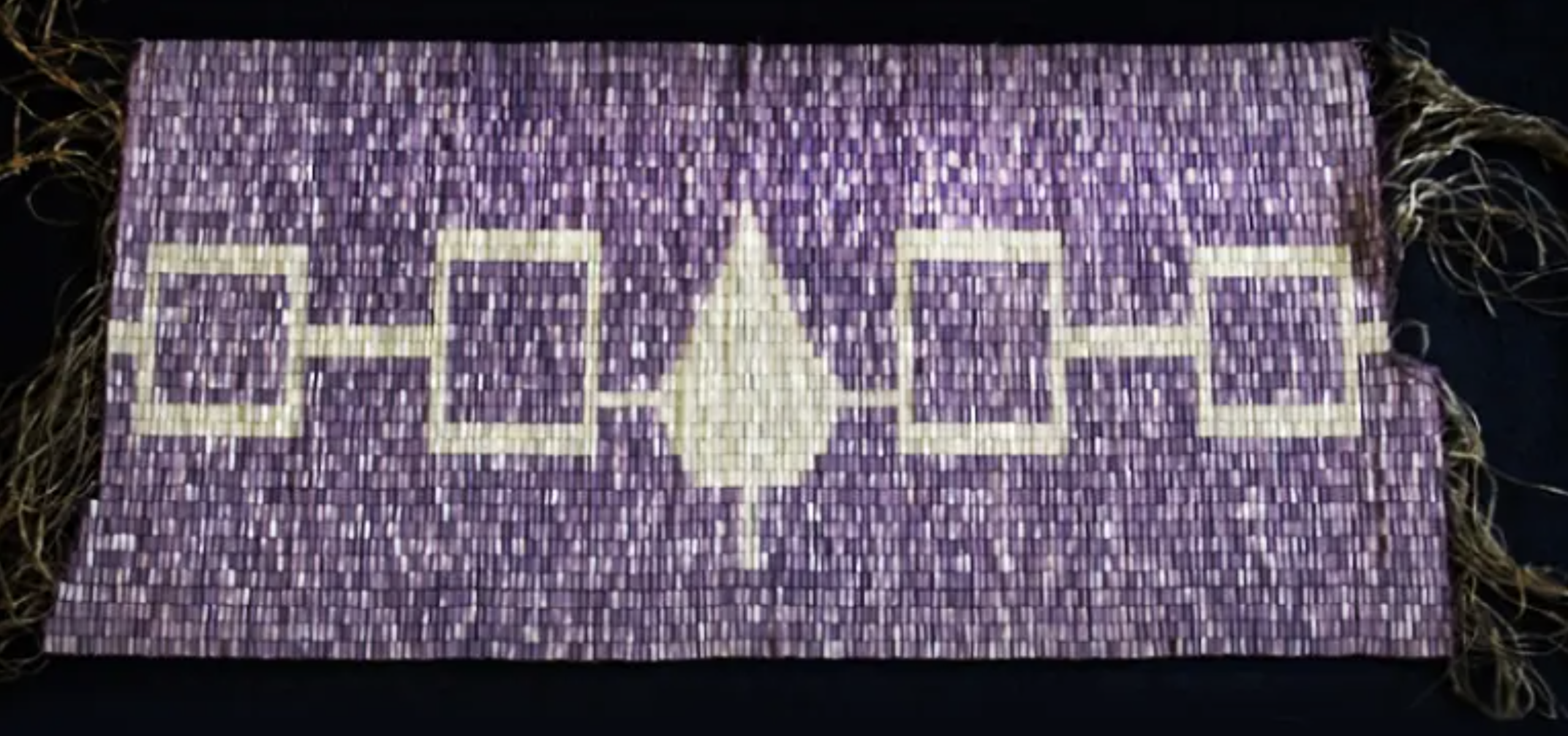
For as long as Cognomos has existed, there have been Ultra Vires articles complaining about its usage. This article is yet another in that series, but perhaps from a new perspective.
This fall, the Faculty offered for the first time a course on Wampum, taught by Professor Sanderson (who is, to use a legal term, the G.O.A.T.).
For those unfamiliar with Wampum, they are quahog and whelk shells used by Indigenous peoples of the Northeast portions of Turtle Island to record law. These shells are woven into belts, which serve as pictographic or mnemonic aids for the oral version of a given law. Often, they are international in nature, such as the Dish With One Spoon, which still governs the relationship between the Haudenosaunee and Anishinaabe in the areas we now call Southern Ontario.
The importance of Wampum in the early colonial period cannot be overstated. For settler governments, the ability to create Wampum belts was a prerequisite to being in relation with their Indigenous allies. Without Wampum, there could be no treaties, and therefore no valid legal claim to important geographical areas or political and contractual rights. It is for this reason that some colonial governments accepted Wampum as payment for taxes.
So, the tradition of Wampum physically represents the often-forgotten power of Indigenous peoples over settler-colonial governments in the early colonial period, the validity of our legal claims within the settlers’ systems, and the idea that our relationships with colonial governments must return to a model of mutual respect for each other’s sovereignty.
Many students of the Indigenous Law Students’ Association (ILSA) ranked the Wampum class highest in Cognomos, including yours truly. Naturally, perhaps due to the fact that the class is pass/fail without a traditional final exam (the ‘test’ consists of creating a physical Wampum belt), many of the students at the Faculty also ranked it highly. For weeks, my friends and I joked that the most U of T Law scenario would be for them to get in despite being settlers, leaving the Anishinaabe man on the sidelines. I’m sure you see where this is going.
Twenty seats were available in the course. The vast majority of those went to non-Indigenous students. According to my insider information, there are two Indigenous J.D. students in the class.
This article should be in print on Wednesday, September 30, or the National Day for Truth and Reconciliation. Hopefully you know that many of our traditions were once banned from being taught or practiced, a time within living memory for many Elders. This means that ILSA’s participation in classes dealing primarily with these traditions is not just to fill a three-credit-shaped hole in our schedule, but the decolonial reclamation of our ancestral traditions and knowledge.
This article is not to say that you, my beloved non-Indigenous reader, should feel bad for taking up a seat in that class. In fact, assuming your reasons for ranking the class so highly are pure, I applaud you for taking interest in our traditions. So much of the difficulty in Indigenous-Canadian relations is the result of a failure to listen to each other, prevalent on both sides. Your taking of that course is but one small step to building a more educated, tolerant, and appreciative country for all of us. Some may call that reconciliation.
To the Faculty’s credit, they appear to have realized how bad the optics are, and have scheduled a meeting with ILSA to discuss the specific issue of Sanderson’s Wampum course, scheduled after the Ultra Vires submission deadline.
However, the problem goes beyond one course for one student group. The proximate cause of the preclusion of Indigenous students from the ability to learn about our own traditions lies in a Jackman-wide system: Cognomos.
The key problem with Cognomos is the assumption that all of us should have equal access to all courses. Say, for example, you came to law school with the sole intention of practicing in family law. Why should you be given equal priority for a seat in a relevant course as someone who picked up a New York job two years ago and intends to coast, simply because they put it in the same band as you? Sure, the Faculty will point to the ‘award-winning economic theory’ or whatever, but economics has never traditionally been the ally of Indigeneity.
Surely, a better alternative exists.
This past summer, I managed to escape from Plato’s Cognomos cave, and have seen the shadows on the wall for what they are. By that I mean, I’ve now experienced registering for classes at another law school.
In the spring of 2027, I’ll be studying at the Allard Law School at the University of British Columbia. My course registration experience could not be more different from Jackman Law. First, I knew months in advance when my registration date was, and had months to build my schedule. That’s right, build my own schedule. I dragged and dropped courses, and then dragged and dropped some more, watching my timetable come together right before my eyes. On the day of registration, I logged on and hit the ‘Register All’ button, and watched as All were indeed Registered. I couldn’t believe it. I mean, where was the catch? Why was I able to get what I wanted, nearly a full year before classes begin? And for Creator’s sake, where was my beautiful economic model?
Again, this is not a problem unique to Indigenous students. To be a student at the Faculty is to suffer at the hands of Cognomos. What is a unique problem is having that algorithm get in the way of you and your ancestral right. Something needs to be done, and I’m happy to help. We have nothing to lose but our chains.
All my relations,
Cameron Smith
Co-President,
Indigenous Law Students’ Association