








Highlights and reflections from my summer at Rainbow Railroad
The State of Queer Rights Globally
As of writing, there are currently more than 60 countries worldwide that criminalize LGBTQIA+ identities. In 12 of those countries, homosexuality is punishable by death. Many other countries use public order, indecency, vagrancy, and other misdemeanour offences to criminalize LGBTQIA+ identities in effect. Despite this legislation creating an immense need for LGBTQIA+ refugee protection, both Canada and the US have recently introduced legislation that further restricts access to asylum, and European governments have implemented new policies that would redirect refugees to other third countries.
Rainbow Railroad reports that of the at-risk LGBTQIA+ individuals who contacted the organization for assistance in 2025, the top three reported health and wellness concerns were lack of basic needs (77%), mental health (55%), and homelessness (36%). Among safety concerns, 76% of individuals reported community rejection, followed by family-based rejection (75%) and life-threatening violence (63%).
About Rainbow Railroad
Rainbow Railroad is a non-profit, human rights organization operating in the US and Canada that supports at-risk LGBTQIA+ individuals globally. As an IHRP fellow this summer, I worked with Rainbow Railroad’s Resettlement Pathways team on completing applications to Canada’s Government-Assisted Refugees (GAR) program. The GAR program is similar to the traditional private sponsorship model for refugee immigration, with the main distinction being that the Government of Canada serves as the sponsor instead of individual citizens or organizations. The Government of Canada and its NGO partners provide financial and social resettlement support for up to one year following arrival in Canada, and the program is completely free to applicants.
Every act of support that Rainbow Railroad provides starts with a request for help. LGBTQIA+ people feeling unsafe can reach out through their website to initiate a case. External partners are also able to refer cases to the organization.
Rainbow Railroad operates a variety of different support programs. The specific support provided to an individual depends on their country of origin/citizenship, current location, and needs. At the simplest end of the spectrum, Rainbow Railroad can help connect people to grassroots organizations in their areas. This is almost exclusively the case for those located in countries such as the US, the UK, Australia, and other countries where LGBTQIA+ human rights are, for the most part, state-protected. However, perhaps the bread and butter of the organization is the Emergency Travel Support (ETS) and Resettlement Pathway programs. These two programs support individuals fleeing their current countries and help them resettle in a country that will provide them with adequate protection.
The ETS team primarily assists people who do not completely meet the 1951 UN Refugee Convention (Refugee Convention) definition of a refugee, but are nonetheless fleeing persecution based on their sexual orientation, gender identity or expression, and/or sex characteristics (SOGIESC). They provide both financial and logistical support so individuals can exercise their right to asylum in a safe country, as provided for under Article 14 of the Universal Declaration of Human Rights. Rainbow Railroad then refers individuals to LGBTQIA+ organizations on the ground in their countries of relocation for resettlement support.
The Resettlement Pathways team works exclusively with individuals who meet the definition of a refugee under Article 1A(2) of the Refugee Convention. In other words, to qualify under this program, individuals must have already fled their country of citizenship or habitual residence due to a well-founded fear of persecution based on their sexual orientation, gender identity or expression, and/or sex characteristics (SOGIESC). They must also be unable to seek protection from their home country and unwilling to return there, as they face the possibility of torture, imprisonment, or even death upon their return. Under this program, individuals are referred to Canada’s GAR program for refugee resettlement in Canada.
Individuals seeking refugee status through GAR cannot apply on their own; they must be referred through a limited number of partner organizations, including Rainbow Railroad and the United Nations High Commissioner for Refugees (UNHCR). Rainbow Railroad is able to refer up to 250 individuals to GAR each year, which includes both the LGBTQIA+ people at risk and their immediate family members. Rainbow Railroad’s GAR referral ability is a direct result of the organization’s advocacy efforts with Immigration, Refugees and Citizenship Canada (IRCC) and the Canadian government. Historically, only the UNHCR was able to refer individuals to GAR, but it has since been opened to other trusted organizations. In 2023, this pathway was opened up to Rainbow Railroad in response to the unique barriers faced by LGBTQIA+ people in the refugee status determination process. This change recognized that many organizations, including the UNHCR and IRCC, are ill-equipped to understand and respond to the unique crises and needs of LGBTQIA+ people.
The Work I Did
This summer, I referred eight individuals for resettlement through Canada’s GAR program, and I worked with four more, whose applications were still in process by my final day. These individuals have come from countries with some of the harshest environments for LGBTQ+ people globally, including Uganda, Syria, Somalia, and Yemen, to name just a few.
Before I was assigned a case, individuals had already reached out to the organization for assistance, and their identity as an LGBTQIA+ person had been verified by the intake team. The intake team will have also collected some basic information and documents from them. Once verified, Rainbow Railroad conducts a vulnerability assessment with individuals. Since the organization’s capacity to assist individuals is limited, the vulnerability assessment allows the team to prioritize using the available referral spots to assist those who are the most in need. Once cases have been selected for referral to the IRCC, individuals complete a rough draft of the application forms before the case is assigned to a caseworker.
Once the case came to me, I would go through all of the materials received from the client and highlight any issues, inconsistencies, or missing information. I then set up meetings with the client to go over their application and discuss any issues I found. Subsequently, I completed their application and submitted it to the IRCC. The amount of time it takes to complete an application varies drastically based on the number of individuals, the age of the individuals, and other factors.
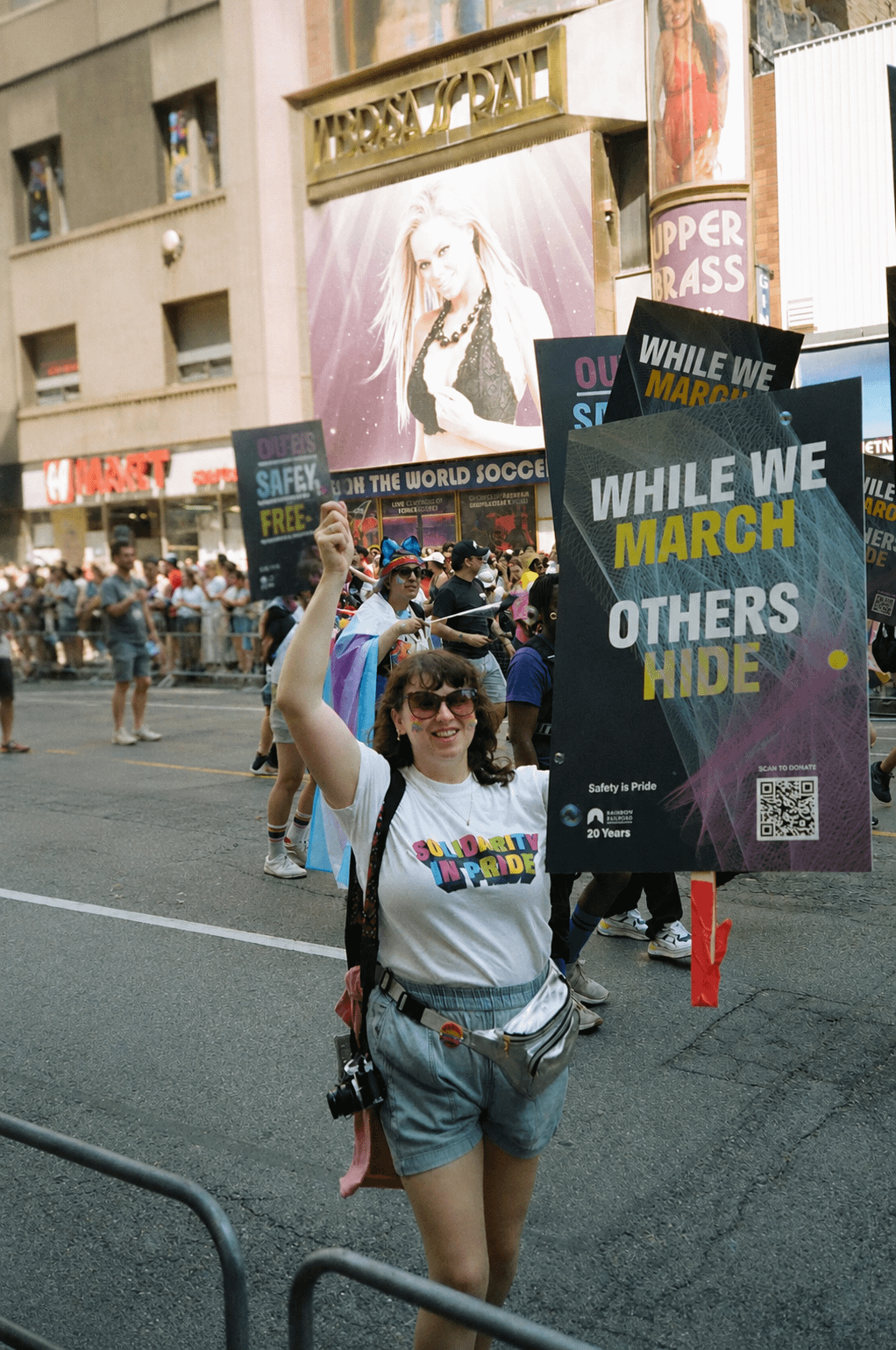
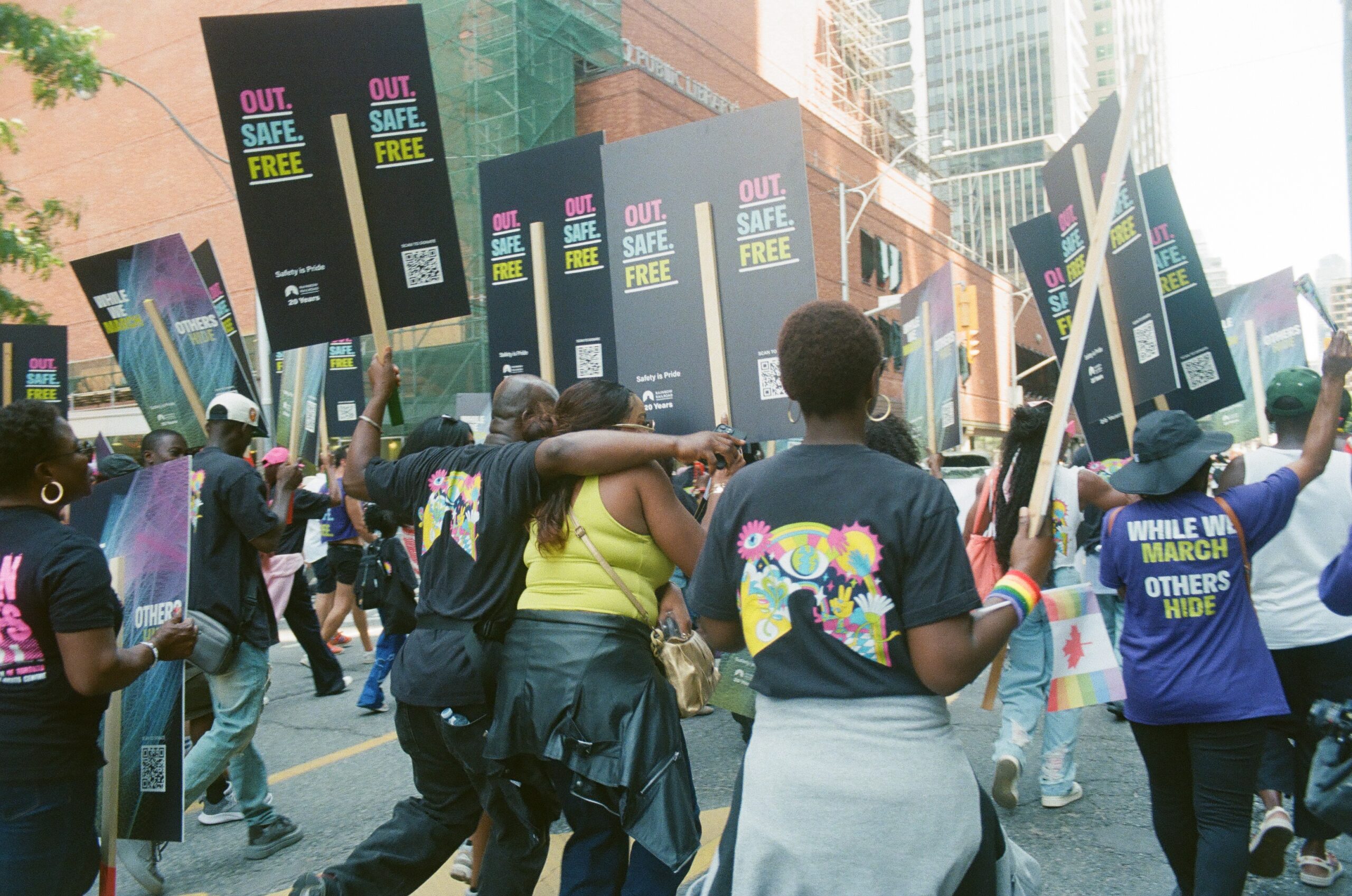
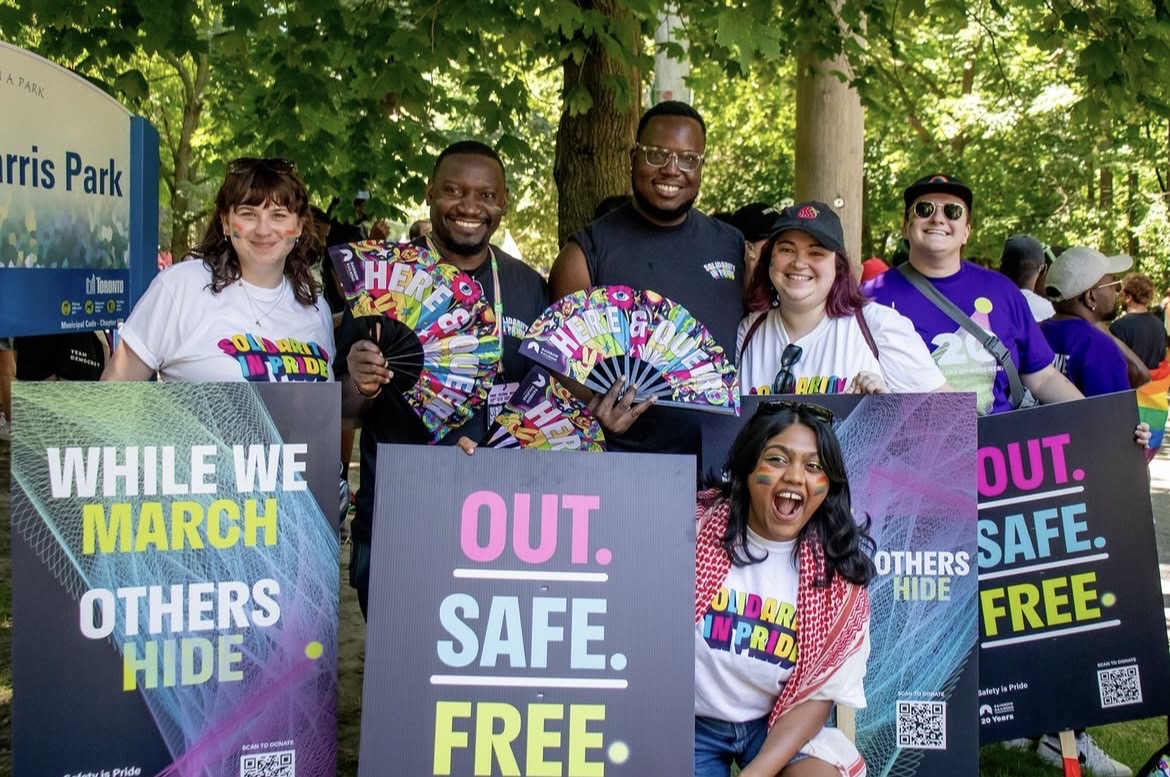
I also had the opportunity to march with Rainbow Railroad in the Toronto Pride Parade this year. This was my first ever Toronto Pride, and it is certainly one I will never forget. Many of the individuals who joined us in the parade were refugees that the organization had supported over the years. I also participated in Rainbow Railroad’s Pride staff fundraiser and raised almost $500 for LGBTQIA+ refugees through my network.
Reflections
My time at Rainbow Railroad was incredibly positive and life-changing. I was consistently inspired by the individuals I worked with and the seemingly endless resilience and kindness they possessed. I learned so much about the entities and organizations worldwide whose missions are to assist refugees and LGBTQIA+ individuals, while also gaining insight into the ways in which some countries’ domestic refugee law is failing those same individuals. Gaining experience working with individuals with different cultures, religions, and languages other than my own is a lesson I will always carry with me.
One of my biggest learning experiences has been developing the skills necessary for trauma-informed casework. I witnessed the wide variety of ways in which trauma impacts an individual’s ability to communicate about their experiences. Most commonly, the people I worked with struggled to remember specific details of their lives well. For instance, I often worked with information like “I remember it was around Ramadan,” or “it was right after my brother got married.” To create a consistent and plausible application, I would produce a supplemental addendum to the IRCC explaining what information was estimated and an approximate margin of error with reference to the firm dates that the individual provided me with. It was also common for people to be rather vague about the experiences that led them to seek asylum. During my time at Rainbow Railroad, I had to learn how to ask questions that are both specific enough to ensure the individual responds with the detail I need, yet broad enough to refer to information I did not have.
One of the more difficult skills I have worked on in this role is discerning when an individual’s vague or inconsistent statements were the result of trauma, and when they were the result of a fabricated story. I also learned to navigate confronting an individual about inconsistencies in a way that is not harsh or accusatory, while still making it clear that the information is not matching up. Thankfully, many of the inconsistencies I encountered were clarified without raising any credibility concerns.
I am endlessly grateful to have had this opportunity so early in my life and legal career. While I am still figuring out where to go from here, the lessons I learned and experiences I had at Rainbow Railroad will shape my future as a lawyer in a multitude of ways. I would specifically like to thank my supervisor, Zahra Mahmoodi, for her endless support this summer, as well as Maicel Neema and Paige MacLean for training me and navigating their first fellowship placement with me! Finally, I would like to express my gratitude to the International Human Rights Program team for making this fellowship a possibility for me.