








Working with the Elimu impact evaluation unit in Kenya was a transformative experience that highlighted the structural necessities upon which justice is built
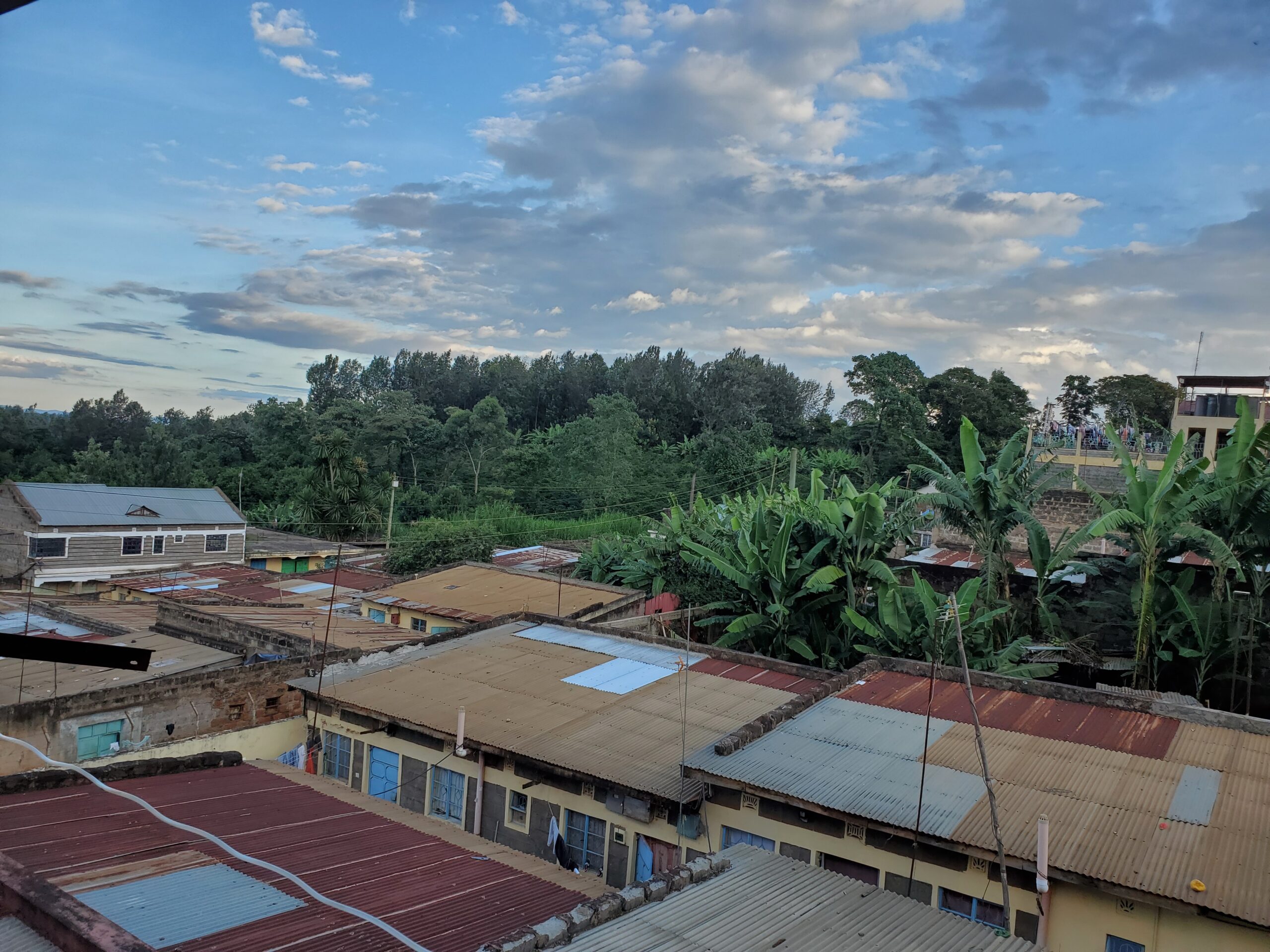
This summer, thanks to the generous support of the International Human Rights Program (IHRP), I had the incredible opportunity to work with the Elimu Impact Evaluation Unit to provide legal aid services in Kianyaga, a remote village located at the base of Mount Kenya.
About the Elimu Impact Evaluation Unit
The Elimu Impact Evaluation Unit was established in 2006 by Matthieu Chemin, a professor in the economics department at McGill University. Professor Chemin has produced a significant body of research on the impact of access to institutions, particularly the judiciary, on economic growth. He has also investigated the impact of policies and interventions like energy infrastructure, insurance, and credit in Kenya.
On one level, the mandate at Elimu is like that of any other legal aid clinic: providing free legal services to clients lacking the resources to access them otherwise and conducting community outreach to procure clients. What makes Elimu unique, however, is that it is also a randomized economic experiment, conducted with the consent of our clients. As part of the research project, following client intake, Elimu collects survey data on economic markers, such as clients’ perceived security of property rights, investment, access to credit, and entrepreneurship before and after the aid is provided. This allows the unit to gather data that enables us to conduct robust economic analyses identifying the causal relationships between access to legal institutions and these markers.
As a current JD/MA candidate who studied economics and international relations during my undergraduate degree, Professor Chemin’s research is highly relevant to my interests. As a result, I expressed my interest in working at Elimu this summer. A few months and a 20-hour trip later, I found myself in Kenya.
My Experience
The legal aid team at Elimu is relatively small, comprising seven members. As a legal intern, the lion’s share of my work involved working directly with clients to help them resolve a wide range of legal issues. This work included succession claims, land boundary disputes, and family law matters. However, the small size of our team translated into having the space to contribute to every part of the organization’s operations, including community outreach, strategic planning, and economic analysis. As a result, my day-to-day work could entail legal research and consultations in the office, gathering cases and handing out pamphlets to local farmers who had come to the weekly livestock market, or knocking on the local coffee farmer co-operative’s door to explain what we do to their manager. One common attribute of every day, however, was the sense that I was doing something substantive and impactful, in a context completely different from anything I had previously experienced.
As someone who is clearly not a local (people often called me “Mzungu”, meaning “white person” or “foreigner” in Swahili, when I walked through the village), my first few weeks in the village were devoted to learning the local way of life and understanding the circumstances in which our clients come into the office for help. One of my more meaningful experiences during this period was a homestay at a local farmer’s home for several days, helping with daily chores like gathering plants for the goats, cleaning the pigpens, and fetching spring water. This process helped me understand the weight of the legal services that we were providing and highlighted the human element of every subsequent interaction I had with clients.
Challenges
Despite getting some initial exposure to the cultural and socioeconomic context of Kianyaga, there were notable challenges that came with working in rural Kenya. First and foremost was the language barrier—many of our clients spoke very limited English and were far more comfortable conversing in Swahili or Kikuyu, the local language. Consequently, I relied on my local colleagues to act as translators during my client meetings. I ultimately worked around this challenge by coordinating with my team and planning ahead, making sure we had aligned on the legal issue we were addressing, and that I was getting enough information during the meeting to feel sufficiently engaged.
The second challenge I encountered was the lack of robust digital infrastructure, which I admittedly may have felt more acutely as someone for whom the internet was always a consistently available and dependable resource. Searching for relevant case law using the Kenyan judiciary’s website was often difficult due to its limited Boolean search functionality, as well as its frequent outages, which could often last for multiple days. Secondary sources also proved somewhat difficult to find and check for reliability, either because they were not digitized or did not exist at all. Combined with near-weekly power outages of unpredictable duration due to critical infrastructure challenges, legal research proved to be difficult and led me to rely on my supervisor’s knowledge. I came to recognize the important role that technology and legal research platforms play in reducing the frictions that one might encounter in the process of providing legal services, which ultimately translate to higher legal costs. This gap in searchability and secondary sources could presumably be addressed with artificial intelligence (AI), and indeed, some startups in Nairobi are developing legal AI tools to provide a solution to this issue. While the jury is still out on the sustainability and risks associated with AI, this context provides a more compelling use case than most. While AI would still be subject to fundamental problems like power outages, it could serve as a stopgap solution to supplement the judiciary’s limited search functionality and authority on case law while these tools develop.
The third challenge I encountered was a highly inefficient bureaucracy, the effects of which were amplified by the lack of digital infrastructure. These administrative bottlenecks are chiefly the result of insufficient resource allocation. According to the Kenyan Judiciary’s Official Medium-Term Expenditure Framework, the Judiciary has been receiving less than half of its budgetary requirements. This has hampered its ability to recruit judges and judicial officers, construct courts (particularly specialized courts like Small Claims Courts and Gender Justice Courts), and invest in digital infrastructure like electronic filing platforms. In my experience, in order to conduct land searches, discharge charges on land, and extract judgments, we had to travel physically to courts at least twice per task (and often more, if the office did not have the documents by the time they promised). This meant that a day’s work could involve hiring a motorcycle to go to a court hours away, just to be told to come back in a few days. Throughout my experience, this proved to be an immense source of friction and uncertainty for clients, who had to be physically present at the offices at the cost of their working hours.
Reflections
Working in rural Kenya has been an invaluable opportunity for me to consider how the disciplines of law and economics can and should work together to promote justice and human rights. With respect to my individual experience, the infrastructural challenges that I encountered were a strong reminder that the path from legal doctrine to just outcomes for individuals is ultimately dictated by real-world circumstances and resource constraints. While the legal aid I provided was meaningful and I strove to ensure that our clients could find solutions to their legal problems, I felt that the crux of the issue was a deficiency in the resources allocated to key institutions like the Judiciary, combined with inadequate critical infrastructure.
To counter this challenge, the utility of the economic analysis being done at Elimu would be in developing an empirically and economically driven argument to generate this kind of structural change. By providing evidence for the premise that legal institutions promote the kind of long-term decision-making and resource use that is conducive to stability and economic growth, we can allow policymakers to make the case for access to justice where resources are scarce, and growth is a priority. In debates concerning the allocation of resources, investment into institutions like the judiciary could then be framed in terms of its economic benefit rather than being a mere cost center.
Ultimately, despite having only spent three months in Kenya, I gained incredibly valuable substantive legal experience, met and worked with a host of highly driven, entrepreneurial, and smart people, while developing a practical and interdisciplinary perspective on how legal institutions impact individuals. I would like to thank Angela, Grace, Kennedy, and Professor Chemin, with whom I had the privilege of working at Elimu, and once again thank the IHRP for their amazing self-directed fellowship opportunity.
The views expressed in each article are solely those of the author(s) and do not necessarily reflect the views of the Rights Review Editorial Board or the International Human Rights Program.