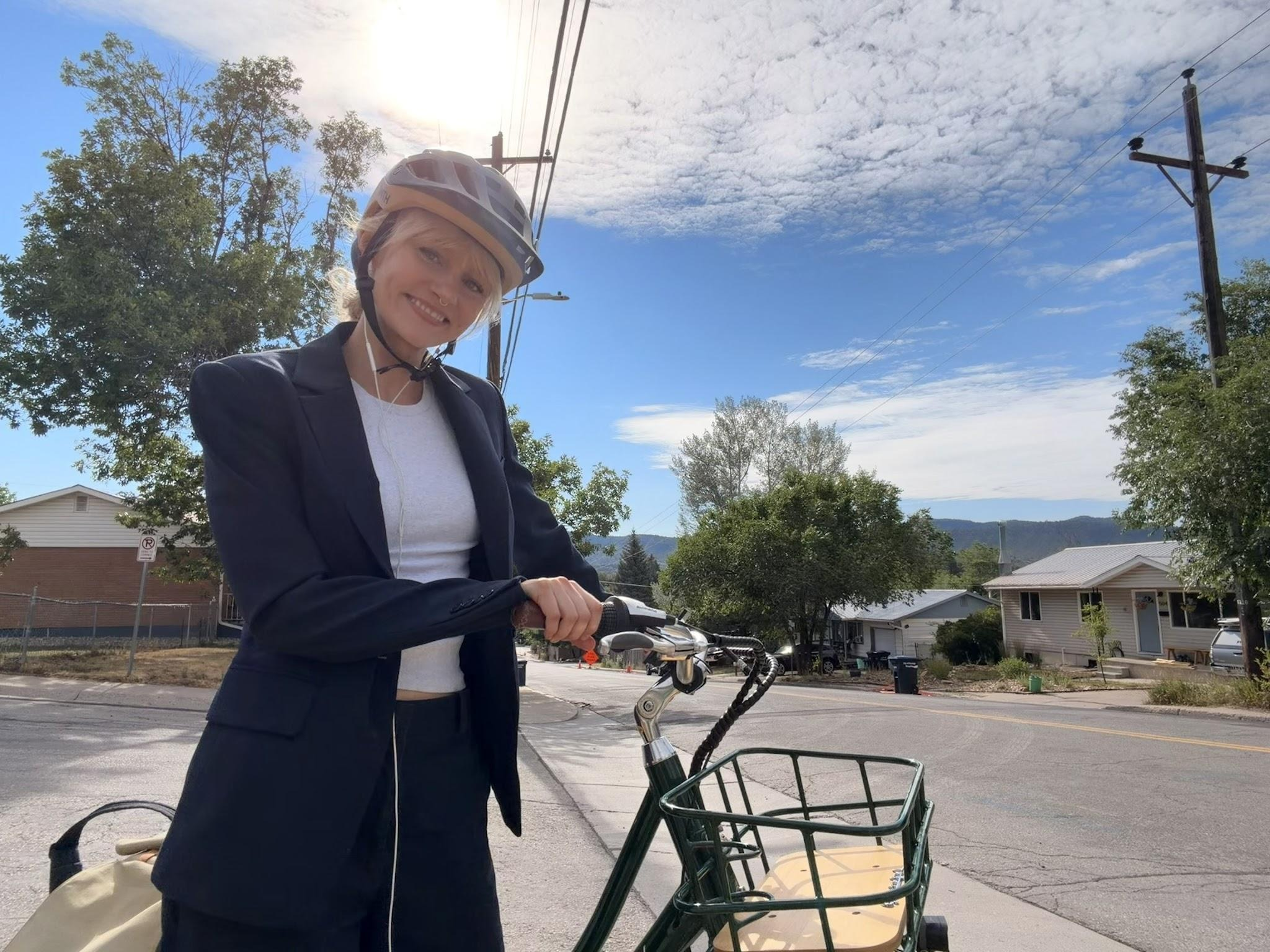
Exploring the future of environmental law!
Sophia Teed is a 2L student at the University of Toronto Law School. Prior to law school, she completed a master’s in history, studying the Indian Residential School Settlement Agreement, and then spent two years working in public policy and prison advocacy.
Standard environmental law focuses on the regulation of human beings’ relationship with nature and the parameters under which humans may exploit and use natural resources for their own benefit—this has the effect of making nature a means to an end. Environmental law seeks to mitigate damage through regulation, permits, quotas, and impact assessments. In order to take legal action, human plaintiffs must demonstrate environmental impact to themselves or their property. While this approach is certainly useful in some settings, it fails in many regards. Environmental impact is often measured based on a singular event: for example, the courts ask, what was the status of the land prior to the building of a mine? Rather than asking, what was the status of the land prior to the total impact of the extractive industries that have exploited it? This approach is also focused on the biophysical, rather than taking a holistic view: it does not meaningfully take into account Indigenous culture and knowledge, or the effects of harm to one biosphere on regional ecosystems or the Earth’s climate as a whole. At the heart of these failings is environmental law’s inability to see the Earth as a separate entity from humans. Standard environmental law is human-centric rather than eco-centric.
The Rights of Nature (RoN) and Indigenous Knowledge-centred environmental legal movements offer an alternative approach. By granting nature legal personhood status, these movements can recognize nature’s inherent rights to exist, persist, regenerate, flourish, and foster the communities (non-human and human) that engage with nature’s past, present, and future. By granting nature legal personhood, designated guardians (trustees or Indigenous stewards) represent nature in the legal world, protecting it through treaties and legislation, and proving direct harm to nature, rather than proving the secondary effects this harm has on human beings.
This summer, I had the invaluable experience of entering the global network of people working to recognize RoN and integrate these legal innovations into legislation and litigation. For my 1L Summer, I chose to complete an International Human Rights Program (IHRP) Student-Initiated Fellowship at the Earth Law Center (ELC) in Durango, Colorado. Serving as a Legal Justice Fellow, I engaged in complex legal research, writing, and strategic project support focused on advancing Earth-centred legal frameworks and Indigenous rights. Working across domestic, comparative, and international law, my contributions directly supported key organizational relationships, strategic legal memoranda, and international treaty negotiations. I saw firsthand how promising the RoN movement is for both the environment and Indigenous communities. This experience was priceless. Learning about the RoN legal movement, I became much more familiar with standard colonial law and its strengths and failings. I see a future in which RoN becomes a standard module and practice in environmental law. So, let me tell you about it!
My fellowship began with an intensive month-long clinic on Earth law given by ELC, which provided foundational training on the transition from traditional environmental law to RoN frameworks. This immersive coursework offered indispensable context for all of my subsequent project work throughout the summer. I have found this course to be very useful already in my 2L at the University of Toronto, as it prepared me for complex doctrinal applications and gave me an overview of how leading lawyers have expanded doctrines to shape new and innovative law.
One of my main projects at ELC was a Canadian-focused, Indigenous-centred project that involved creating a toolkit for Indigenous people to make their own environmental laws in Canada. Working alongside Dr. Kelsey Leonard and fellow intern Robert Moser (U.S. Lead), I served as the Canada Lead to develop a legal research foundation for an ELC toolkit on Indigenous-Led Impact Assessments (ILIAs). ILIAs serve as a vital alternative to colonial environmental impact assessments, which frequently underserve Indigenous nations by failing to recognize the impacts of resource extraction on Indigenous sovereignty and traditional knowledge. My role involved collecting and assessing ILIA case studies across Canada, identifying key gaps and systemic barriers faced by Indigenous communities seeking to initiate their own impact assessments, and conducting a comprehensive survey of Canadian environmental assessment law.
The culmination of this Canadian-centred research was a comparative matrix examining how Canadian, U.S., and Indigenous governance structures incorporate Indigenous legal orders, health justice, cumulative impacts, and specific water responsibilities. During the final week of my internship, I was given the opportunity to present and discuss this work with an Indigenous council composed of First Nations partners to directly support their efforts in establishing self-determined ILIAs.
My other major project involved a transnational comparative approach to the RoN movement to support the CEO of ELC in identifying the potential for a novel application of nature’s rights. Working alongside ELC Executive Director Grant Wilson and lawyer Rachael White, I conducted a state-of-the-field analysis of cutting-edge legal scholarship within the RoN movement. This confidential project involved surveying Canadian Indigenous law cases, analyzing RoN jurisprudence across Latin America, South Asia, and Oceania, and synthesizing legal scholarship to identify novel legal openings for recognizing the natural world. To help Mr. Wilson and Ms. White draft an article for a leading law journal, I conducted detailed research into Canadian jurisprudence to identify potential avenues for environmental personhood, while surveying global RoN precedents to assess how other jurisdictions have successfully elevated nature’s legal status. I also had the opportunity to analyze law review literature intersecting with religious freedoms, cultural rights, and Indigenous jurisprudence to ground our strategic recommendations in established legal theory. This project was one of my favourite assignments of the summer, offering a deep dive into niche legal mechanisms that grant formal rights to natural entities.
Beyond these two core projects, I also worked in the field of international law, maritime law, and UN advocacy. Working alongside ELC’s oceans team—led by lawyer Gayle Carter and marine biologist Lucy Ward—I contributed to several initiatives surrounding ocean sovereignty, the historic Biodiversity Beyond National Jurisdiction (BBNJ) Agreement, and deep-sea mining moratoriums. I assisted ELC in seeking partnerships to elevate Indigenous voices and governance in ocean stewardship following the BBNJ Agreement. Drafting a legal memorandum focused on Pacific Island nations lacking Marine Protected Area (MPA) designations, I explored how establishing MPAs can grant sovereign decision-making authority that scales up to international governance levels. Additionally, I helped draft ELC’s comprehensive MPA Toolkit to promote Earth-centred ocean protection. To support ELC’s event on Deep Sea Mining Moratoriums at the International Seabed Authority UN delegation conference, I researched and drafted communications to UN delegates and legal advisors to secure member support, gaining firsthand insight into the field of international ocean law.
Beyond enhancing my legal research skills, working at ELC provided an incredible workplace and community experience. I had the privilege of collaborating with brilliant, driven lawyers and fellow interns passionate about environmental justice. Spending time at ELC’s Durango, Colorado office allowed me to experience a small-town public interest practice, reconnect with nature, and swap law school perspectives with peers from Harvard and Stanford. I found that this experience really helped me understand the value of attending the University of Toronto, as the ELC team gave me many opportunities to apply my knowledge of Canadian law! It was also lovely to return home to Colorado, where I lived for two years while completing my master’s degree. While in Toronto, I have missed hiking, swimming in rivers, taking long, beautiful bike rides, and connecting with nature. It was nice to remind myself that there is a subset of legal professionals who build incredible careers for themselves without compromising their relationship with nature. One unexpected perk of spending my summer in Durango was helping ELC’s Executive Director stage a martial arts film screening––this showed me that even leaders in the field of law can maintain their passions and work-life balance. Living and working in Durango was a uniquely rewarding component of the summer.
Reflecting on the summer, this fellowship provided an invaluable opportunity to ground my legal education in international human rights and environmental advocacy. My experience at ELC reaffirmed the power that legal innovation has to advance climate justice, and I am deeply grateful to the IHRP and ELC for a transformative summer. Thank you, thank you, thank you!
The views expressed in each article are solely those of the author(s) and do not necessarily reflect the views of the Rights Review Editorial Board or the International Human Rights Program.